
The Pagan Origins of Christmas: History, Myth, and Modern Consequences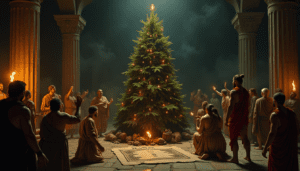
Christmas is widely presented today as a celebration of the birth of Jesus Christ. It is commonly associated with family gatherings, generosity, lights, trees, and goodwill. However, when examined carefully through history, scripture, and early Christian testimony, it becomes clear that Christmas is not rooted in the teachings of Jesus, his disciples, or the earliest Christian communities. Instead, it is a festival shaped by pre-Christian pagan traditions, later absorbed into Christianity for political and cultural reasons, and in modern times transformed into a global engine of consumerism with serious social consequences.
Long before Christianity associated December 25 with Jesus, pagan civilizations across Europe and the Roman world marked the winter solstice with religious festivals. In ancient Rome, Saturnalia was celebrated in honour of the god Saturn. It involved feasting, gift-giving, role reversals, drunkenness, and public revelry. Another major Roman cult honoured Sol Invictus, the “Unconquered Sun,” whose festival was officially observed on December 25, symbolising the rebirth of the sun after the darkest days of winter. In northern Europe, Germanic and Norse peoples observed Yule, a winter festival centred on evergreens, fire rituals, and feasting. These celebrations shared common themes of sun worship, fertility, renewal, excess, and indulgence.
The Bible itself provides no date for the birth of Jesus, nor does it command believers to commemorate it. More importantly, the biblical description of Jesus’ birth strongly suggests it could not have taken place in winter. The Gospel accounts describe shepherds living outdoors and keeping watch over their flocks by night, something highly unlikely during the cold and rainy Judean winter. Travel conditions would also have been difficult, making long journeys such as that of Mary and Joseph far less practical. In addition, the account of the Magi following a star presumes clear night skies, not the overcast winter conditions typical of December. Nowhere in the Bible is Jesus’ birth associated with cold, snow, or winter imagery. The fact that December 25 always falls in mid-winter further highlights the disconnect between the biblical narrative and the later chosen date.
Early Christians were well aware of pagan birthday customs and generally rejected them. Origen of Alexandria, writing in the third century, stated that only sinners celebrated birthdays. Tertullian warned against adopting pagan practices that compromised religious identity. For the first few centuries of Christianity, there was no celebration of Jesus’ birth at all.
The transformation of pagan festivals into a Christian holiday occurred centuries later. In the fourth century, under Emperor Constantine, Christianity became favoured within the Roman Empire. Faced with a population deeply attached to pagan traditions, church authorities chose accommodation rather than confrontation. December 25 was officially designated as the birth of Jesus, deliberately aligning it with existing solstice and sun-deity celebrations such as Sol Invictus. This decision was political and cultural, not biblical or prophetic. Pagan festivals were not abolished; they were rebranded.
One of the most visible symbols of Christmas today is the decorated evergreen tree. The use of evergreen trees long predates Christianity and was central to pagan winter rituals, where such trees symbolised life and fertility during the darkest time of the year. Trees were cut, brought indoors, and adorned as part of these rituals. The Old Testament repeatedly warns against adopting such practices. In Jeremiah 10:2–4, believers are cautioned not to learn the ways of the nations, describing people who cut a tree from the forest, shape it by human hands, and decorate it with silver and gold. Other passages reinforce the same principle: Deuteronomy 12:29–31 forbids imitating pagan religious practices, Deuteronomy 16:21 condemns sacred tree symbolism linked to pagan worship, and Isaiah 44:14–17 mocks the act of cutting trees and assigning them religious meaning. Together, these texts reflect a consistent biblical rejection of ritual objects and customs borrowed from pagan religion.
Pagan religion itself was often brutal. Historical sources record that during the reign of Antiochus IV Epiphanes in the second century BCE, an altar to Zeus Olympios was erected in the Jerusalem Temple. Pigs were sacrificed on the altar, and circumcised Jewish children were executed in an attempt to eradicate the religious identity for the children of Jacob. These events, recorded in 1 and 2 Maccabees and by the historian Josephus, form the historical background of Hanukkah. While this is not the origin of Christmas, it demonstrates the violent and oppressive nature of pagan religious systems that biblical faith consistently opposed.
Modern Christmas bears little resemblance even to its claimed religious purpose. It has become one of the most aggressively commercialised events in the world. Enormous pressure is placed on people to spend excessively, often resulting in debt that takes months to recover from. Retail sales peak, credit card debt rises, and financial stress follows. Alcohol consumption increases dramatically, contributing to domestic disputes, broken marriages, infidelity, and regret. Emergency services, counselling centres, and charities regularly report increased strain during the Christmas period.
There is also a significant social cost. Many people experience heightened loneliness during Christmas, especially those without family, those who are divorced, widowed, or socially isolated. What is marketed as a season of joy becomes, for many, a painful reminder of loss. Children are often encouraged to equate happiness with gifts, and impulsive decisions are made, such as buying pets “for Christmas,” only for many of those animals to be abandoned once the novelty wears off.
Closely connected to Christmas is the celebration of the New Year. Both are rooted in the same Roman calendrical system and revolve around the Gregorian calendar, which itself is centred on the assumed birth of Christ. New Year celebrations inherit many elements of pagan festivals, including excess, fireworks, alcohol-fuelled parties, and moral looseness. Though often presented as secular or harmless, they share the same cultural and ideological foundations.
Among Muslims, participation in Christmas and New Year activities is often justified as harmless social participation or “for the children.” This may include gift-giving, decorations, office parties, or attendance at environments involving music, alcohol, and free mixing, even if one does not personally drink. Islam, however, places great importance on preserving religious identity and moral boundaries. The Prophet Muhammad ﷺ warned, “Whoever imitates a people is one of them” (Abu Dawud). Islam provides its own celebrations—Eid al-Fitr and Eid al-Adha—rooted in worship, gratitude, charity, and obedience to God, without imitation or compromise.
Understanding the true origins and consequences of Christmas strips away its manufactured innocence. It is neither a celebration instituted by Jesus nor one practiced by his earliest followers. It is a pagan festival repackaged for political convenience and later commercialised for profit, with far-reaching social, moral, and spiritual consequences. Awareness allows people to make informed, principled choices rather than following tradition blindly. Preserving faith, identity, and integrity begins with knowledge.